
Inside the Localization of Resident Evil Requiem
When a franchise has been entertaining audiences for as long as 30 years, it’s safe to say that nearly every word of the canon has

When a franchise has been entertaining audiences for as long as 30 years, it’s safe to say that nearly every word of the canon has

Lara’s relationship with language can serve as a powerful reminder that understanding is built through close attention to the right resources. In game development, that

Voice acting didn’t used to attract so much attention. But nowadays, the way performers interpret a character is front-and-center; clipped by players into comparison reels

Japan reinforces a key lesson for global game publishers: player trust is built on alignment. The Japanese market’s value is hugely enticing, but tapping into

Quality issues do not recognize team boundaries. They show up where systems interact—and often, therefore, where players form their impressions. When testing reflects that reality

Accessibility is a mindset that touches everything and should be adopted accordingly: in writing, design, localization, QA, and voice/audio. In some cases, thinking in accessibility
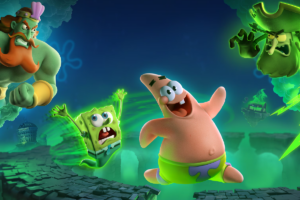
As every fan knows, SpongeBob humor moves fast and hits hard. When Purple Lamp and THQ Nordic commissioned Terra to localize both the text and

LATAM has become one of the most closely watched regions in gaming for its rapid expansion, to the point that it’s hard to frame as

Linguistic QA looks beyond the surface issues that automation is so good at identifying and dives deeper into how language feels and behaves once it

Players rarely notice localized audio when it’s working well. But when a character’s voice cuts off mid-sentence or a line feels rushed and flat? Those

Just as Mario’s job changed to fit a new setting, localized content often needs to adjust to fit a new audience. Tone, humor, and references

MENA brings multiple languages, platforms, and cultural expectations under one label, so successful releases rely on planning that respects that complexity.