
Women are no longer an emerging audience in gaming. They’re an established presence, playing across platforms, discovering new releases, joining communities, and shaping the way games circulate in global markets. The question for studios is not whether women play games, but how well engagement strategies reflect the path these players take before deciding which gaming experiences feel worthy of their time.
Crafting that alignment begins well before a developer launches a game. Everything from store pages to social media posts; friend recommendations to creator clips, each can have a powerful influence on whether a player feels oriented, interested, and confident enough to invest their time in a game or look to a different experience elsewhere.
Discovery Is Part of the Player Experience
Game discovery is often treated as a marketing challenge, but it is also part of the player experience. The first words a player reads about a game can frame its tone, genre, value, and the sense of belonging it imparts. If that content feels disconnected from the prospective player’s expectations, discovery can stall.
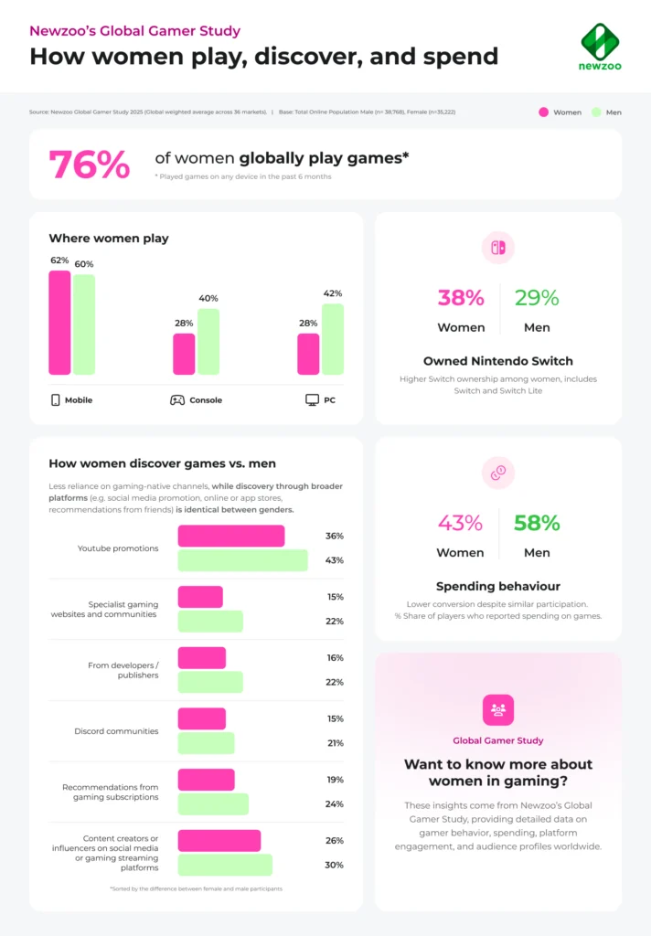
This phenomenon becomes especially relevant when looking at how women find games. According to Newzoo’s Global Gamer Study 2025, women are less likely than men to discover games through gaming-specific spaces like specialist websites, Discord communities, developer channels, and gaming subscription recommendations. However, broader discovery channels, including social media promotions, online or app stores, and recommendations from friends, reflect much smaller gender differences.
For studios, that disparity between entry points indicates a content challenge. Broader channels often give players less context than gaming-native spaces, so every word of a game introduction must work harder. A store page or social ad needs to communicate what the game offers, how it plays, and why it may belong in the player’s next session.
Platform Habits Can Change Content Priorities
Engagement strategies also need to account for where players are spending their time. Mobile remains a major point of access for both men and women almost equally, according to Newzoo, while the gaps are wider on PC and console.
That platform mix can guide how studios prioritize content across touchpoints:
| Platform signal | What content teams should consider |
| Mobile remains a broad access point for all players | Store copy, onboarding prompts, and UI text need to work quickly on smaller screens and for an audience that may have only limited attention to give. |
| PC and console show wider participation gaps between men and women | Messaging should avoid assumptions that every player arrives with the same platform habits, genre expectations, or community references. |
Differing entry-point habits between male and female players does not mean developers have to create separate messaging based on gender. But it does mean there is wisdom in understanding how platform habits influence the way players evaluate a game before they choose to spend time with it. When that understanding guides the content strategy, studios can tailor their approach more precisely and make better use of their global marketing budget.
Trust Can Shape Spending Behavior
Spending behavior is often evaluated through the lens of monetization design, but the content surrounding the actual monetization plays a key role in whether players feel comfortable making a purchase. Players need to understand what they are buying, how it works, whether it expires, and how it affects their gaming experience.
This is one area where clarity can directly support trust. Newzoo’s study reports that 43% of women players spend money on games, compared to 58% of men. That gap should encourage studios to look beyond payment mechanics and examine the communication about its value.
In multilingual games, purchase flows can become fragile when terminology shifts across languages, or reward descriptions aren’t wholly clear. Players need to understand what they are getting for a purchase, and whether that in-game currency purchase carries a real monetary cost in their local currency. When such clarity is missing, player hesitation can weaken conversion.
What Global Content Teams Can Review
A stronger engagement strategy starts with teams reviewing the specific content that shapes a player’s early confidence in a game. Before launching, teams should examine the touchpoints that help players understand the game, evaluate its value, and decide whether they want to move forward.
Key touchpoints include:
- Store page copy and screenshot text
- Cultural alignment
- Social media and creator campaign messaging
- Onboarding flows and tutorial prompts
- Purchase descriptions and reward labels
- Community guidelines, moderation UX, and reporting messages
- Character voice, inclusive language, and tone consistency across languages
This kind of comprehensive review helps teams spot friction before players do. It also keeps global content connected to the wider player journey, rather than treating localization as a final production step.
The Takeaway
Women players are already shaping global gaming, but engagement strategies need to reflect how they discover, evaluate, and build trust with games. The strongest opportunities to strengthen engagement often sit in the content layer, but even then, the right content still needs to appear on the right platform to be found.
For Terra, that kind of alignment is where global content becomes part of the player experience strategy. When localization choices support cultural awareness and trust, studios can create stronger connections with players across markets and platforms.